
When the business outgrows the website built to explain it.
AERECH had expanded far beyond a simple optical transceiver catalog. More product families, speeds, configurations and network applications meant buyers were making increasingly complex decisions inside a website still organized like a much simpler catalog.
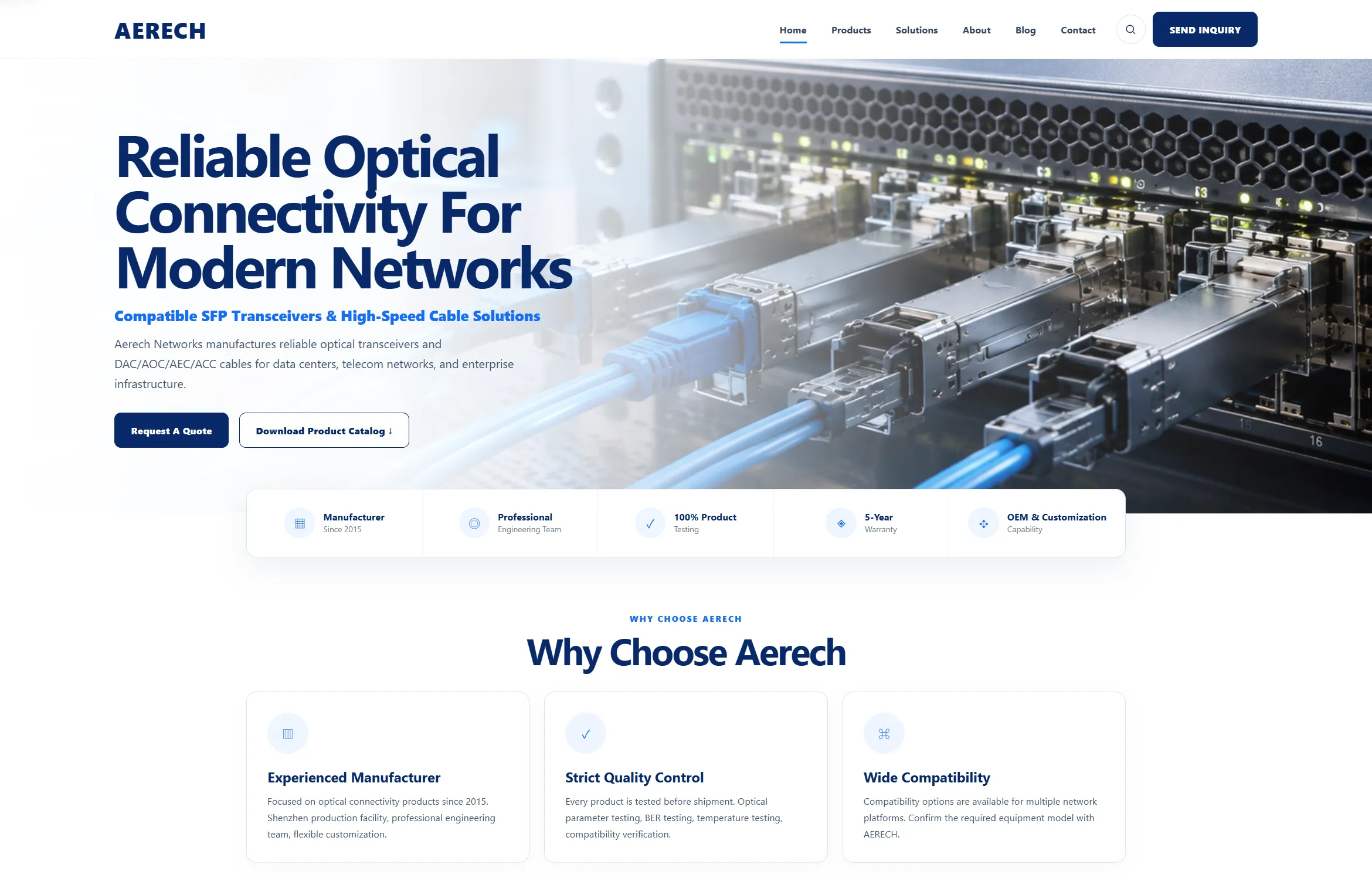
01 · Diagnosis
The interface was not the first problem. The decision path was.
A visual redesign could make the same catalog easier to look at. It would not make the product system easier to understand.
Decision 01 · Product Architecture
Help buyers understand the family before asking them to choose a model.
AERECH’s expanded portfolio first needed a clearer structure across Transceivers, DAC / AOC / ACC / AEC, Fiber / Network Cable, Media Converters and xWDM systems. Only then could the pages guide buyers deeper into the range.
The portfolio did not become simpler. The first decision did.
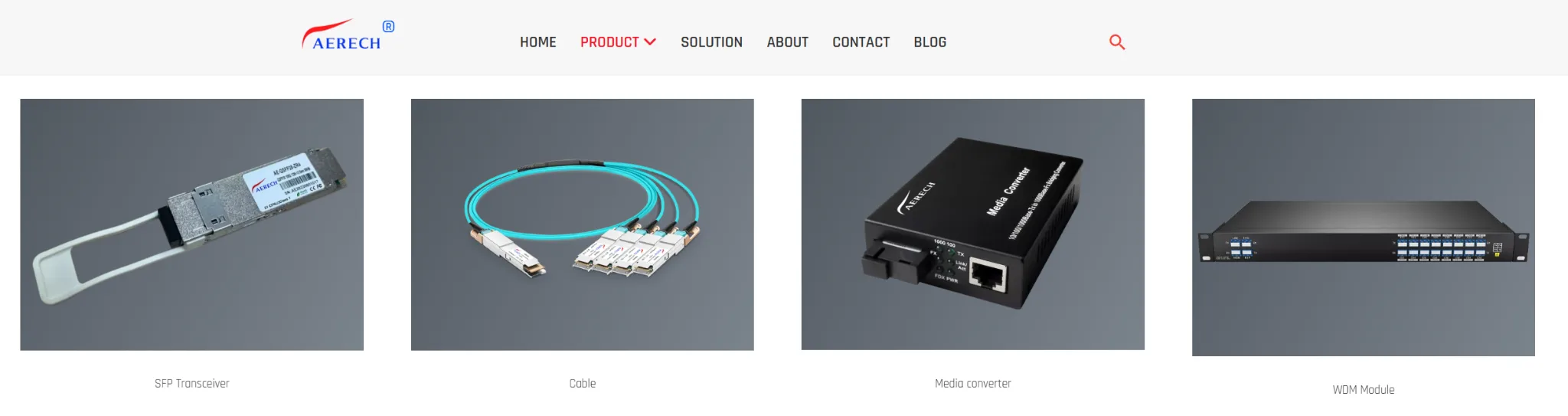
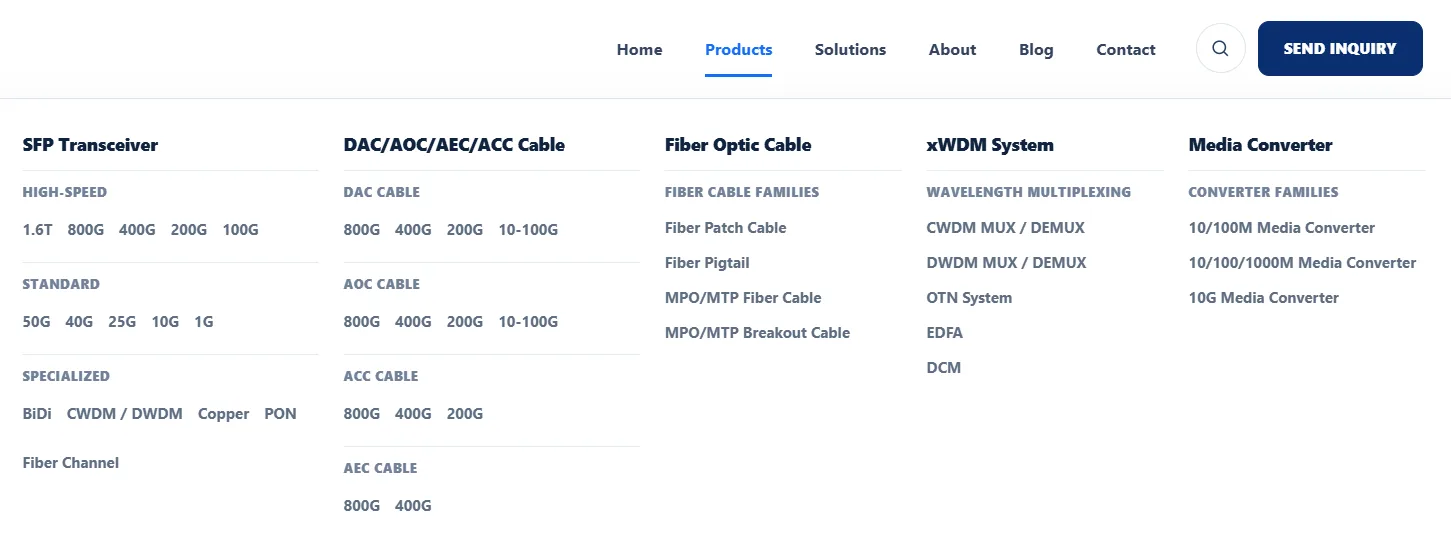
Decision 02 · Product Evaluation
Finding the right family is only the beginning.
Buyers still need to narrow models and verify technical differences. The rebuilt site moves more of that work into the evaluation path — from series-level comparison to technical information where required.
The website does more of the comparison and technical clarification before that work reaches sales.
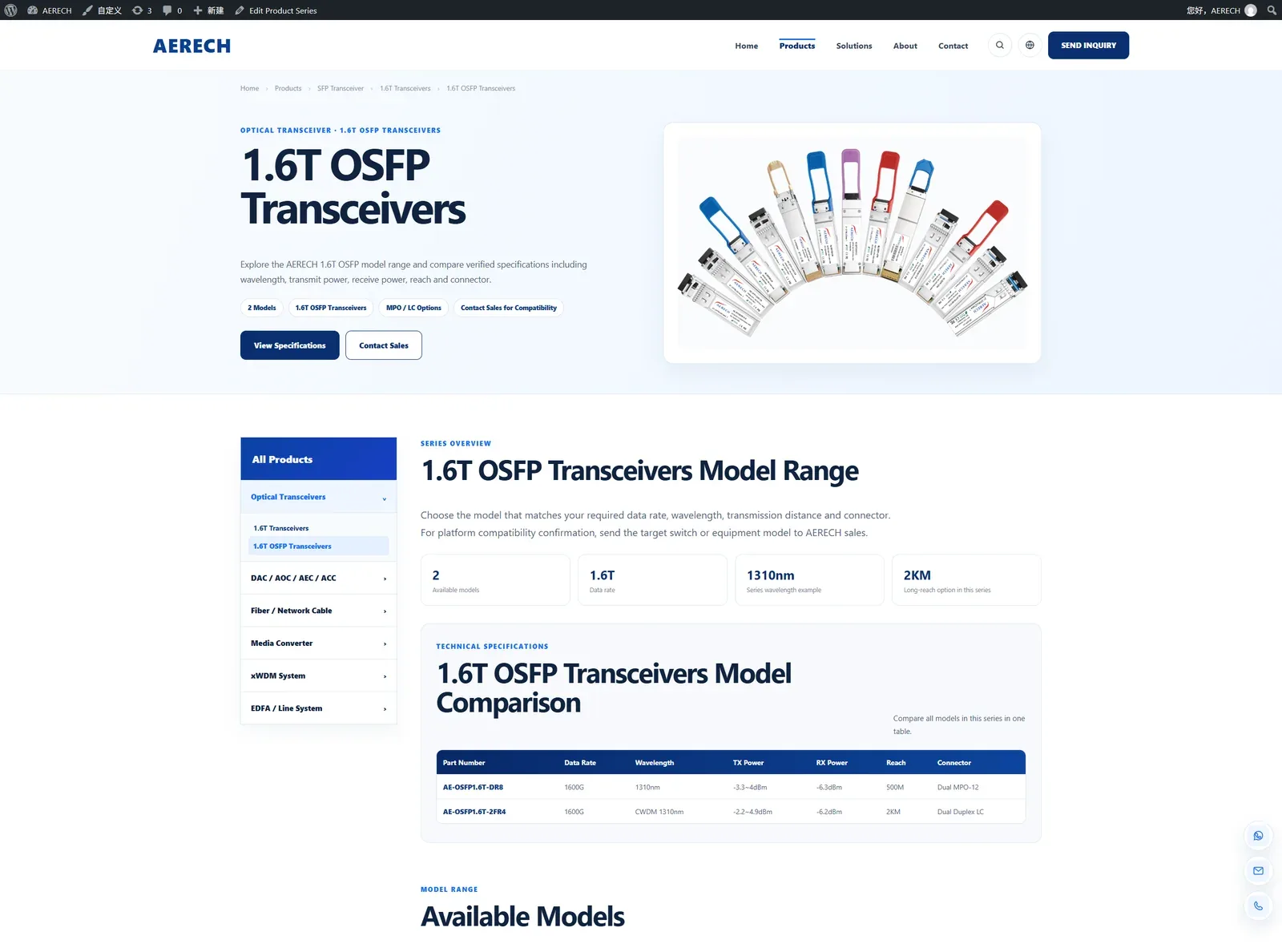
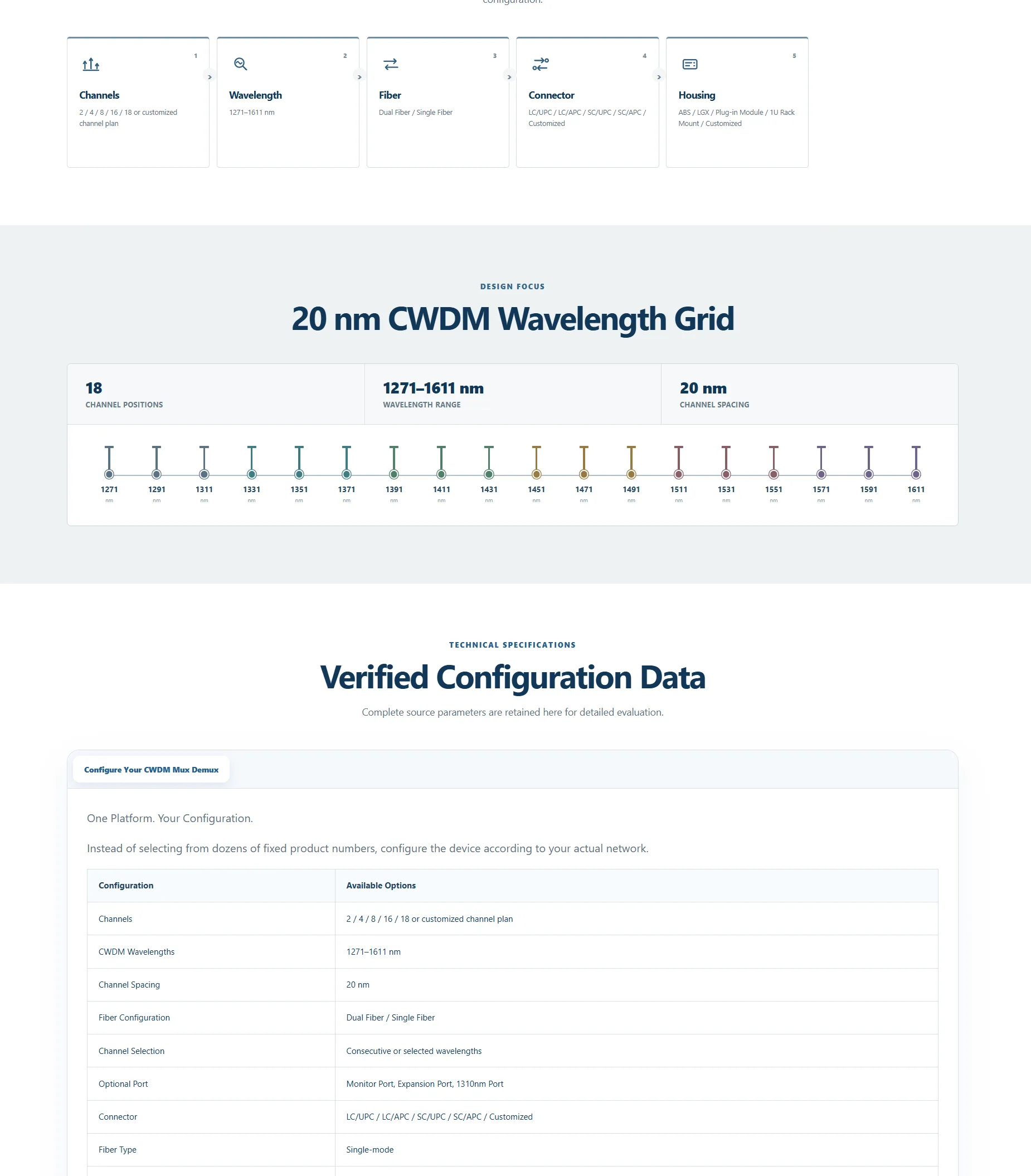
Parallel examples from two product contexts — not a single sequential flow.
Decision 03 · Solution Architecture
Not every buyer starts with a product name.
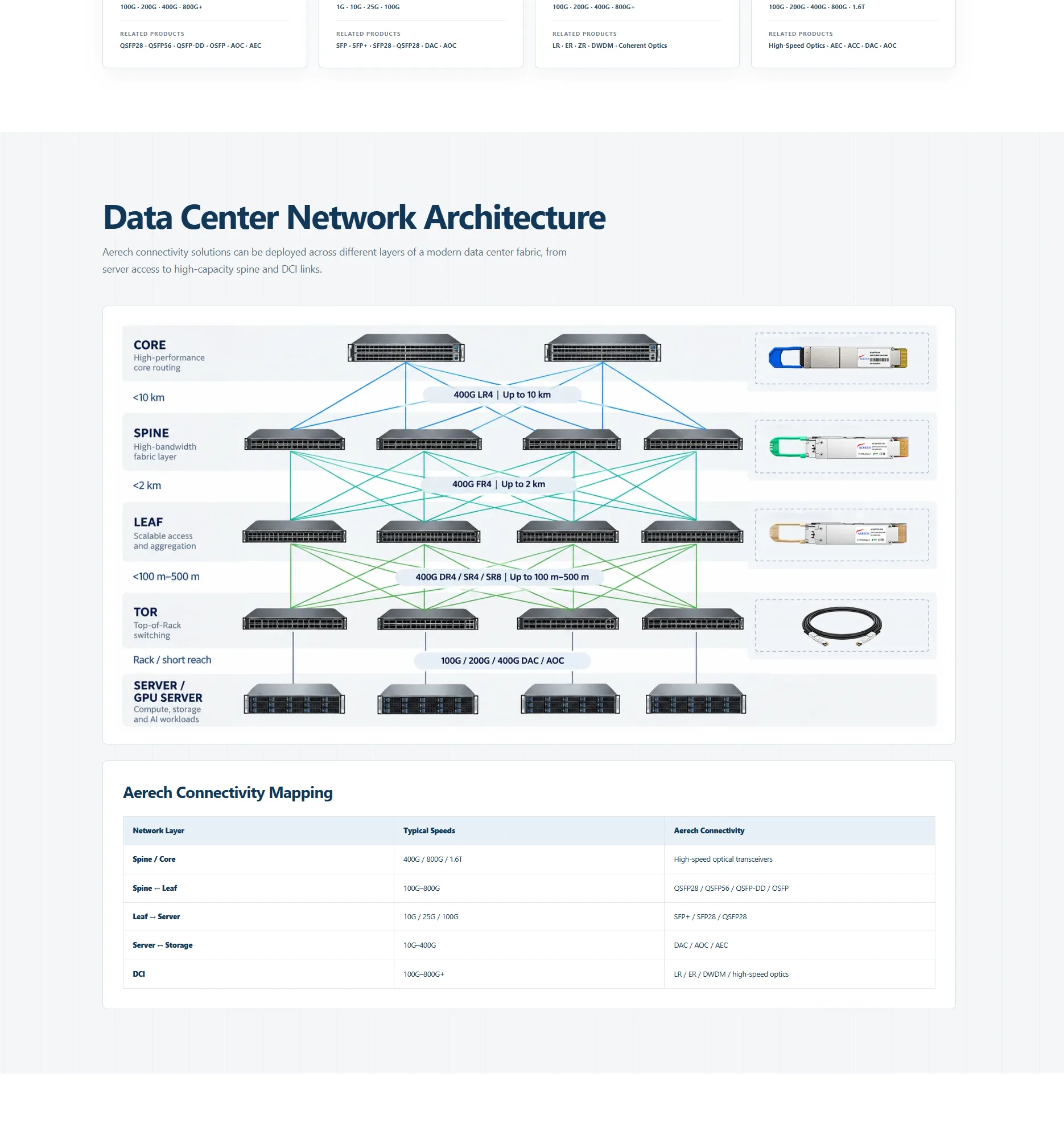
Some buyers know the product they need. Others begin with a Data Center, AI & HPC, Enterprise or Telecom requirement. The rebuilt site adds another route from network context into relevant products and technical information.
Product navigation became one route into the website — not the only route.
Decision 04 · Inquiry
The buyer should not have to start again when they reach sales.
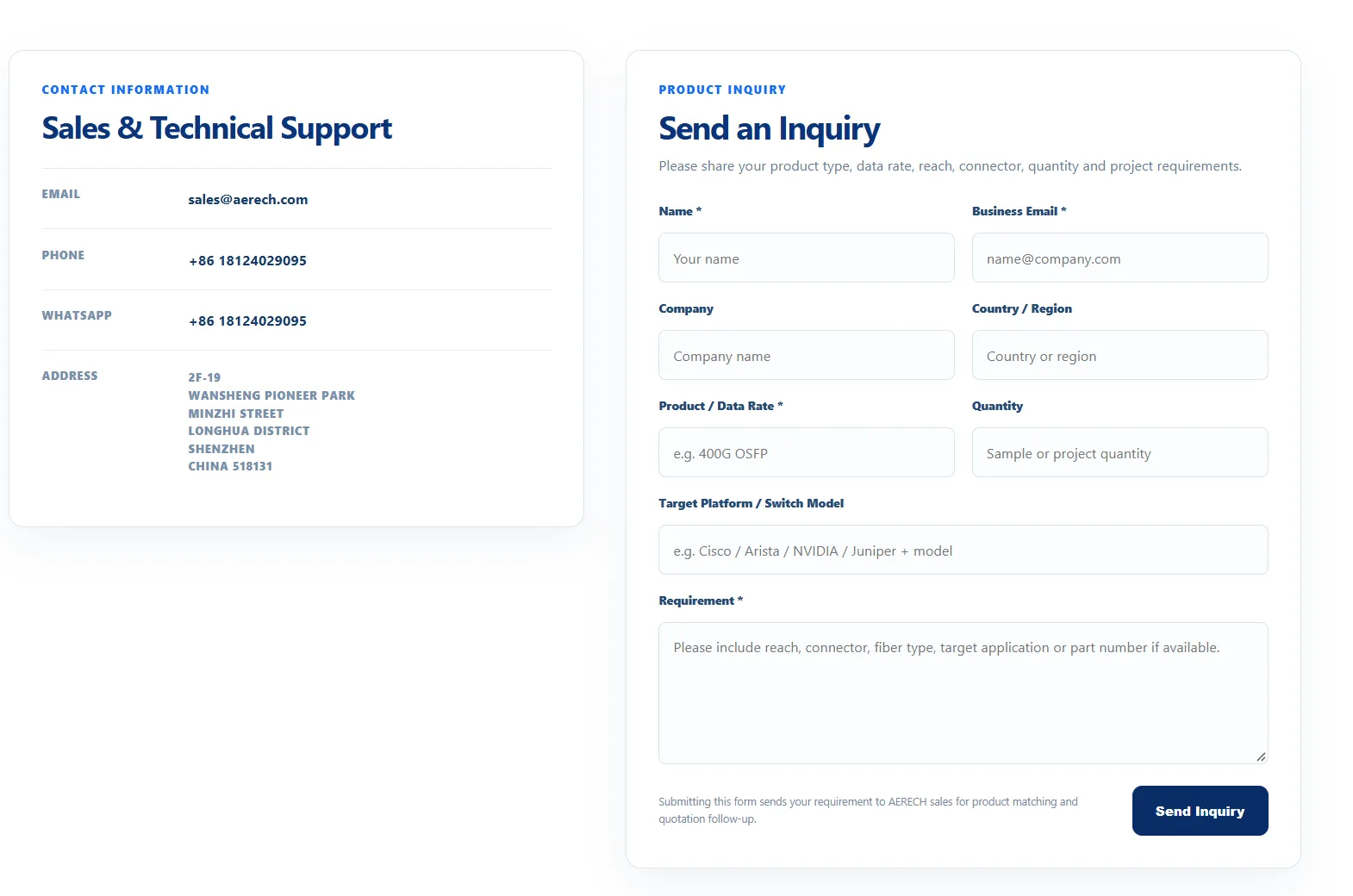
By the inquiry stage, a buyer may already have narrowed a product family, model or technical requirement. The rebuilt inquiry captures more of that context before the conversation moves forward.
The inquiry continues the evaluation instead of resetting it.
What This Case Proves
The rebuild changed who does the interpretation work.
Evidence boundary. This case demonstrates the product-architecture, evaluation, solution and inquiry changes visible in the rebuild. It does not claim traffic, conversion or sales uplift from AERECH.
Has your product portfolio outgrown your website?
If buyers have to decode the catalog before they can evaluate it, the website may be lagging behind the business.
If your product range, technical options or application scenarios have become more complex than the website built around them, we can first identify where that gap actually sits.